
I still remember the meeting. I was sitting in a coffee shop with a financial advisor—let’s call him “Mark.”
I was 29, recently self-employed, and terrifyingly aware that I had zero safety net. If I died, my family would get nothing. No corporate payout, no pension. Just my savings account, which was… let’s say, modest.
Mark laid out two brochures.
-
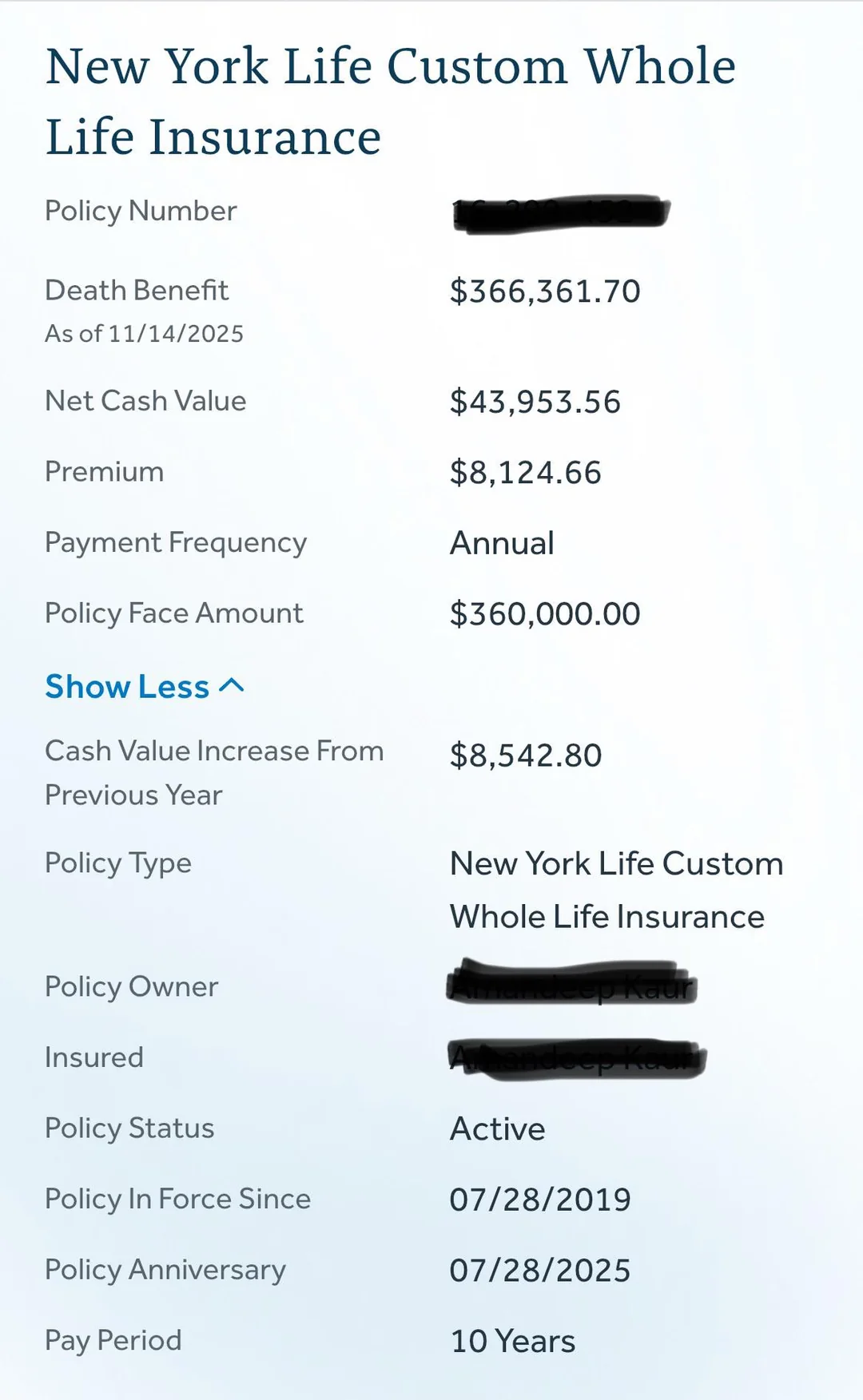
The Shiny One: “Whole Life Insurance.” He called it an asset. He said it would build “cash value.” He said it was for smart investors. The monthly premium? $450.
-
The Boring One: “Term Life Insurance.” He barely mentioned it. He called it “renting coverage.” The monthly premium? $35.
Mark pushed the $450 option hard. “It forces you to save!” he told me. “It’s an investment!”
I almost signed. I didn’t want to be “cheap” with my family’s future. But then I went home, opened Excel, and did the math myself.
I realized something that most agents won’t tell you: For freelancers, Whole Life insurance is a trap.
Here is the breakdown of why I walked away from the “investment” plan and bought the cheap Term plan instead.
The Core Difference (Explained Simply)
Before we get to the math, you need to understand what you are actually buying.
1. Whole Life Insurance (The “Bundle”)
This combines two things: Insurance + Investment. Part of your premium pays for the death benefit. The other part goes into a savings account (Cash Value) that grows over time. Because it covers you for your whole life (until you are 100), the payouts are guaranteed, so the price is astronomical.
2. Term Life Insurance (The “Shield”)
This is pure Insurance. You pay for a specific period (a “term”), usually 20 or 30 years. If you die during that time, your family gets paid. If you don’t die (which is the goal!), the policy expires, and you get nothing back. Because it is temporary and simple, it is dirt cheap.
Why The “Agent Math” Didn’t Add Up for Me
The agent told me that paying $450/month was smart because I would get money back later.
But as a freelancer, I know the value of cash flow.
My Calculation:
-
Whole Life Cost: $450/month for $500k coverage.
-
Term Life Cost: $35/month for $500k coverage.
-
Difference: $415/month.
If I bought the cheap Term plan, I would have an extra $415 in my pocket every single month.
If I took that $415 and invested it myself (in a simple S&P 500 index fund or a retirement account) for 30 years, assuming an average 8% return, do you know how much I’d have?
Over $600,000.
The “Cash Value” in the Whole Life policy offered by the agent would only grow to about $250,000 in the same timeframe.
The Lesson: Insurance is for protection. Investing is for wealth. Mixing them usually means you get a bad version of both.
The “Freelancer Feasts and Famines” Factor
This was the deciding factor for me.
As a freelancer, my income is a roller coaster. Some months I make $5,000. Some months I make $500.
The Danger of Whole Life: If I have a bad month and can’t pay that massive $450 premium, my policy could lapse. I would lose all the coverage and the fees I paid in. It is a huge monthly liability.
The Safety of Term Life: I can always scrape together $35. Even in my worst months, paying the Term premium is easy.
For self-employed people, low fixed costs are the key to survival. Adding a massive mandatory insurance bill is financial suicide.
But What About “Wasting Money”?
The biggest argument against Term Life is: “If you don’t die, you wasted all that money renting the policy!”
I hear this all the time. But think about it—do you say that about your [Car Insurance]? If you pay for car insurance this year and don’t crash your car, do you cry about “wasting money”? No. You are happy you didn’t crash!
You pay for Term Life to sleep at night. You pay to know that if a bus hits you tomorrow, your spouse can pay off the mortgage. That peace of mind is not a waste; it is a service you are buying.
My Strategy: “Buy Term and Invest the Difference”
So, here is exactly what I did, and what I recommend to my freelancer friends:
-
I calculated my need: I needed enough to cover my debts and replace my income for 10 years for my family. That was about $500,000.
-
I bought a 20-Year Term Policy: This covers me until I am 50. By age 50, I plan to have saved enough money that I don’t need insurance anymore (this is called being “Self-Insured”).
-
I automated my savings: I took the money I saved by not buying Whole Life, and I set up an automatic transfer to my retirement fund.
Conclusion: Don’t Let Commissions Dictate Your Life
Insurance agents love selling Whole Life because the commissions are huge (sometimes 100% of the first year’s premium!). They make very little money selling Term Life.
If you are a freelancer, protect your cash flow.
-
Check your budget.
-
Look for [Health Insurance Discounts] to save even more.
-
Buy a simple Term policy.
-
Invest the rest.
Keep it simple. Your future self will thank you.